About LOOT
The full story — how LOOT works
LOOT reads the fiscal receipt QR code every purchase in Serbia already has, and turns it into a fully itemized, categorized picture of spending — no bank connection, no manual entry. It's available now on the App Store in Serbia.
Product deep-dive
How it works, end to end
- Scan QR
- Fetch official fiscal record
- Parse into line items
- Auto-categorize
- Dashboard & statistics
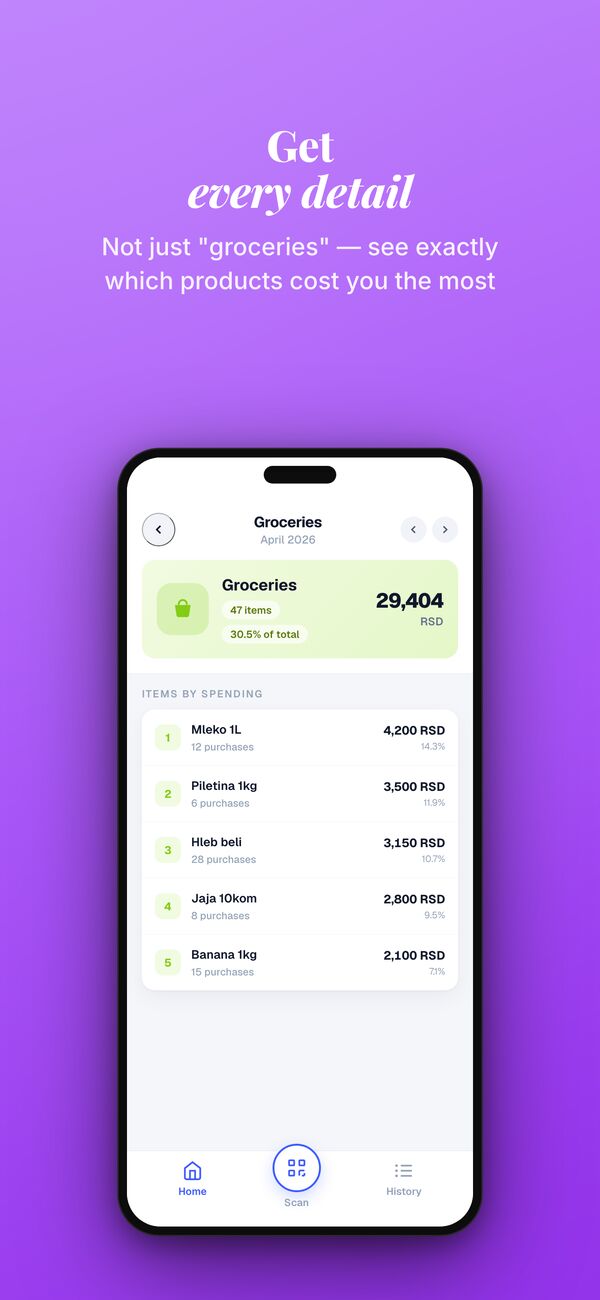
Every item, not just a total
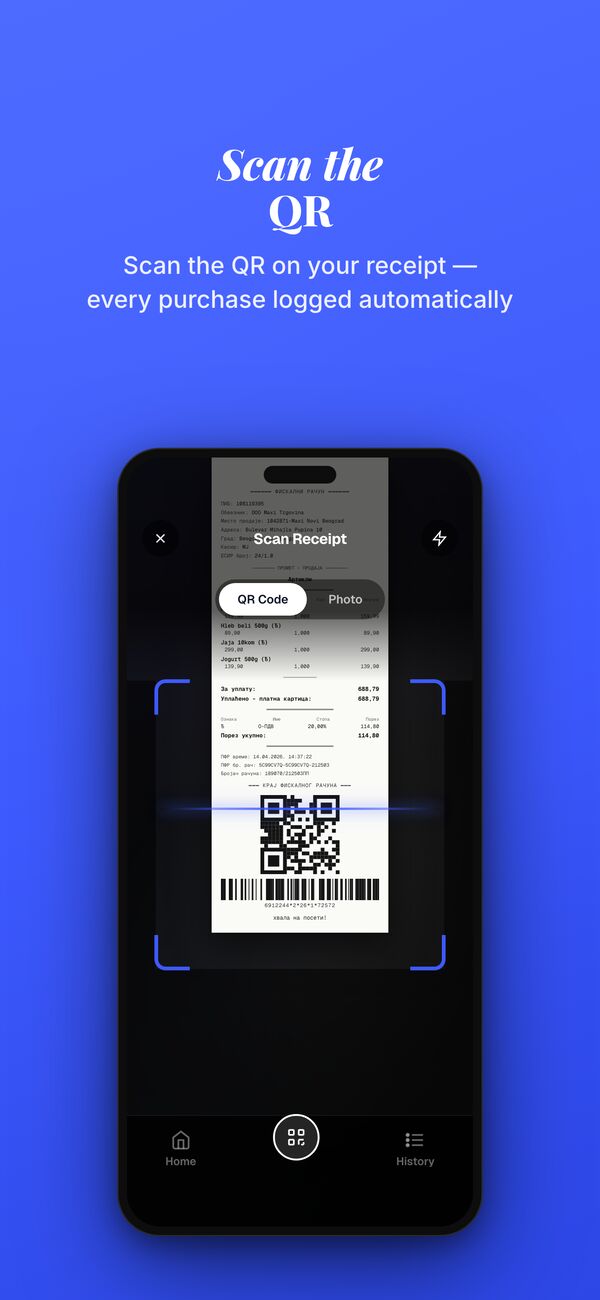
Scanning a fiscal receipt QR code pulls the official government record and parses it line by line — product name, price, and tax rate, not just a lump merchant total the way bank-feed apps see it.
Store info is captured too, so for every product you can see where you bought it, not just what you paid.
Categorization that improves as it's used
Every item is categorized automatically, in order: your own past choices for that item, patterns learned across all users, hints tied to the store, then keyword rules as a fallback. The more receipts scanned across LOOT, the sharper it gets — for everyone.
Spending you can read at a glance
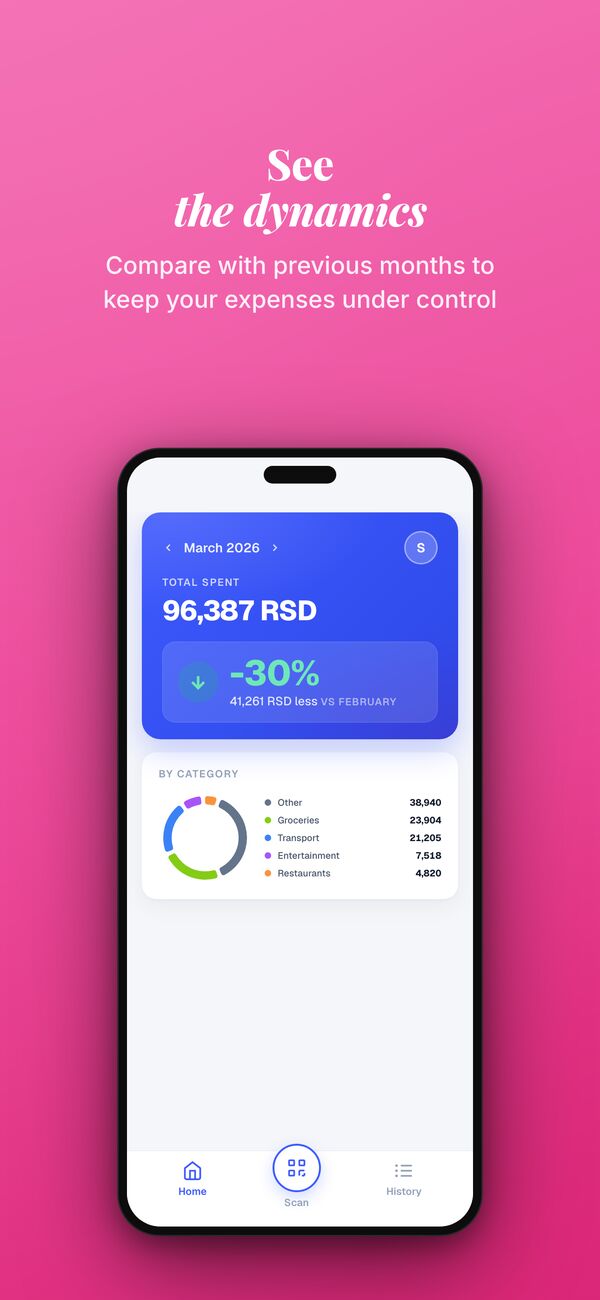
The dashboard shows the monthly total, a breakdown by category, and how the monthly total compares with the previous month — so it's clear whether spending is going up or down.
Why Serbia
Built on infrastructure that's already there
Since 2022, fiscal receipts in Serbia carry a QR code with a publicly verifiable link (eFiskalizacija). LOOT doesn't have to convince anyone to adopt new infrastructure — it reads the code that's already on the receipt.
This is LOOT's live data channel today, and the app is available now on the App Store in Serbia.
Let's talk
Questions about LOOT or how it works with Serbian fiscal receipts? Happy to walk through the product, or anything else.